

The integration of artificial intelligence into classrooms worldwide has moved from experimental pilot programs to mainstream adoption faster than almost any technology in history. These AI in education statistics reveal the dramatic transformation happening across the education sector—from how students learn to how teachers teach and how institutions operate.
This comprehensive listicle presents the most current and compelling education statistics available, drawing from authoritative sources including the Digital Education Council, RAND Corporation, Gallup, and peer-reviewed research from Harvard University and Stanford University.
Whether you're an educator, administrator, policymaker, or researcher, these AI in education insights will help you understand the current landscape and prepare for future trends.
AI Education Statistics 2026
1. 92% of University Students Now Use AI Tools
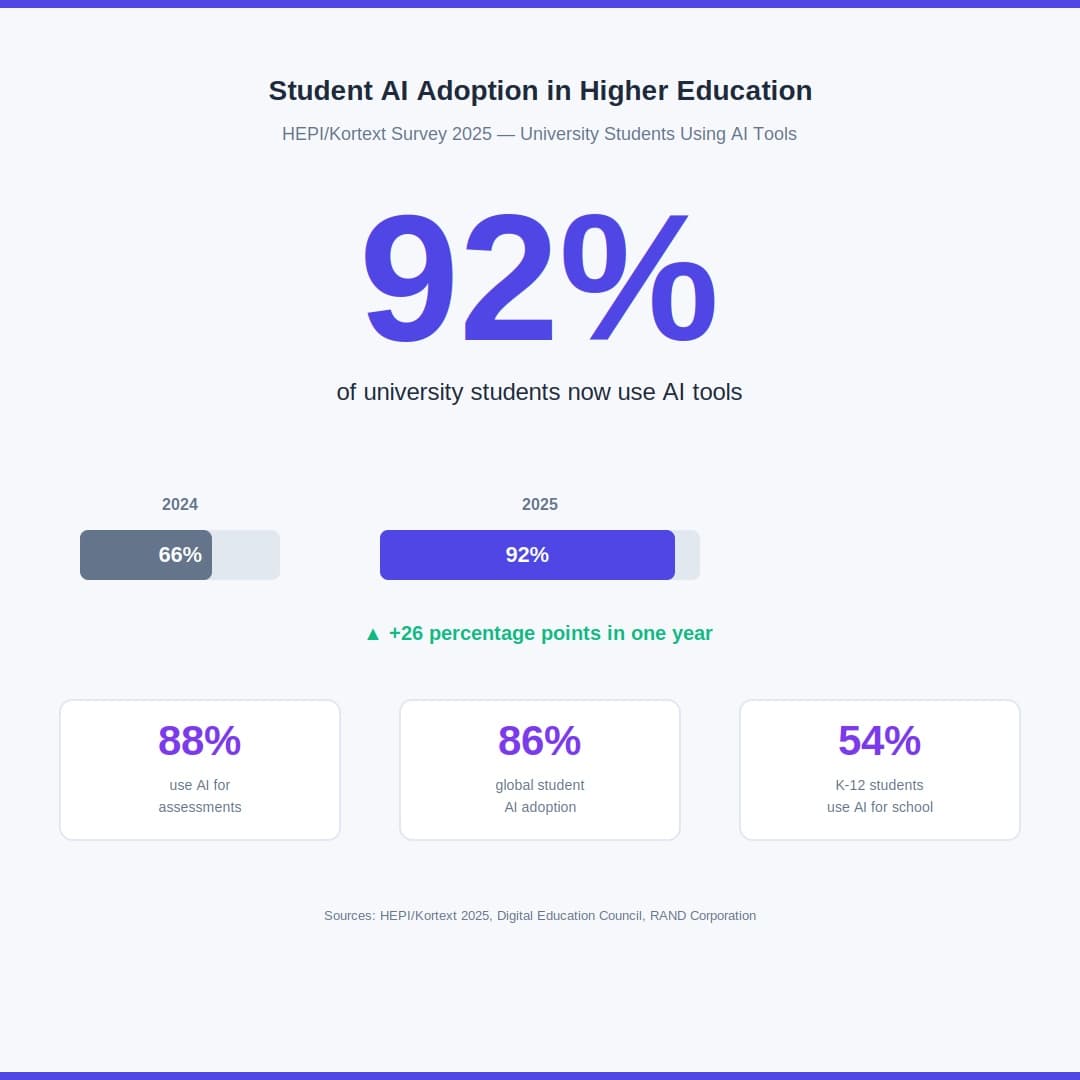
According to the HEPI/Kortext Student AI Survey 2025, 92% of university students now use AI tools in some capacity—a dramatic increase from just 66% in 2024. This represents the largest single-year behavioral shift ever recorded in higher education and demonstrates how deeply generative AI tools have become embedded in the student learning experience. The speed of this adoption far exceeds previous technology transitions, including the adoption of smartphones and social media among student populations.
2. 88% of Students Use Generative AI for Assessments
The same HEPI survey found that 88% of students use generative AI specifically for assessments, up from 53% the previous year. This explosive growth in AI usage for academic work has significant implications for academic integrity and how educational institutions approach evaluation. The data suggests that traditional assessment methods may need fundamental redesign to remain relevant in an AI-saturated environment.
3. 86% of Students Globally Use AI in Their Studies
The Digital Education Council's Global AI Student Survey of 3,839 students across 16 countries confirms widespread AI adoption: 86% of students globally use AI in their studies, with 54% using it weekly and nearly one in four using it daily. Students use an average of 2.1 AI tools for their coursework, indicating that most learners are not relying on a single platform but building a personalized toolkit of AI technologies.
4. 54% of K-12 Students Now Use AI for School
Research from the RAND Corporation shows that 54% of K-12 students now use AI for school—an increase of more than 15 percentage points in just one to two years. For a deeper dive into these trends, see our full analysis of how many students use AI for school. This rapid AI adoption among younger students signals a fundamental shift in how the next generation approaches learning. More high school than middle school students reported using AI, with progressively higher adoption rates as students advance through grade levels.
5. 69% of High School Students Use ChatGPT for Homework
Among high school students, the College Board's 2025 research found that 69% use ChatGPT for homework assignments. The percentage of high school students using generative AI tools for schoolwork grew from 79% in January 2025 to 84% by May 2025, with the most common uses including brainstorming ideas, editing or revising essays, and conducting research. Tools like an AI homework helper reflect this trend by giving students structured support for understanding concepts rather than simply providing answers. Separately, the Digital Education Council's global survey found that ChatGPT is the most popular AI tool among university students at 66% usage overall, followed by Grammarly and Microsoft Copilot at 25% each.
6. 67% of Students Say AI Tools Are Essential
According to HEPI 2025 data, 67% of students agree that using AI is essential in today's world. This perception that AI technologies are now fundamental—rather than optional supplements—represents a major shift in how students feel about their academic toolkit. The primary reasons students cite for using AI are saving time (51%) and improving the quality of their work (50%). From AI flashcard generators to adaptive quiz platforms, students are building personalized study toolkits that fit their learning styles.
7. 64% of U.S. Teens Use AI Chatbots, With 50% of Older Teens on GenAI Apps
A Pew Research Center survey of 1,458 U.S. teens conducted in fall 2025 found that 64% of teens aged 13–17 use AI chatbots, with nearly 30% using them daily and 54% using chatbots for schoolwork help. ChatGPT dominates at 59% teen usage, followed by Google Gemini at 23%. Meanwhile, a February 2026 study in JAMA Network Open analyzing device data from 6,488 U.S. youths aged 4–17 found that one-third (32%) had used generative AI apps on their devices, including 50% of teens aged 15–17, 42% of those aged 13–14, and 20% of children aged 10–12—revealing that AI adoption now extends well below the teenage years.
8. 58% of Students Feel They Lack Sufficient AI Knowledge
Despite high usage rates, the Digital Education Council found that 58% of students feel they do not have sufficient AI knowledge and skills for the future. This gap between usage and competency highlights the urgent need for AI literacy education across all levels. Students are using tools daily that they don't fully understand, creating both risks and opportunities for educational institutions to provide structured guidance.
9. 60% of K-12 Teachers Used AI During 2024-25
How many teachers are embracing AI? According to a Gallup/Walton Family Foundation survey of 2,232 U.S. public school teachers, 60% of K-12 teachers used AI during the 2024-25 school year, with 32% using it at least weekly and 28% monthly or less. For a comprehensive breakdown, see our report on how many teachers use AI. Preparing to teach was the most common daily and weekly AI use at 20%, followed by administrative tasks at 18%.
10. Teachers Who Use AI Weekly Save 5.9 Hours per Week
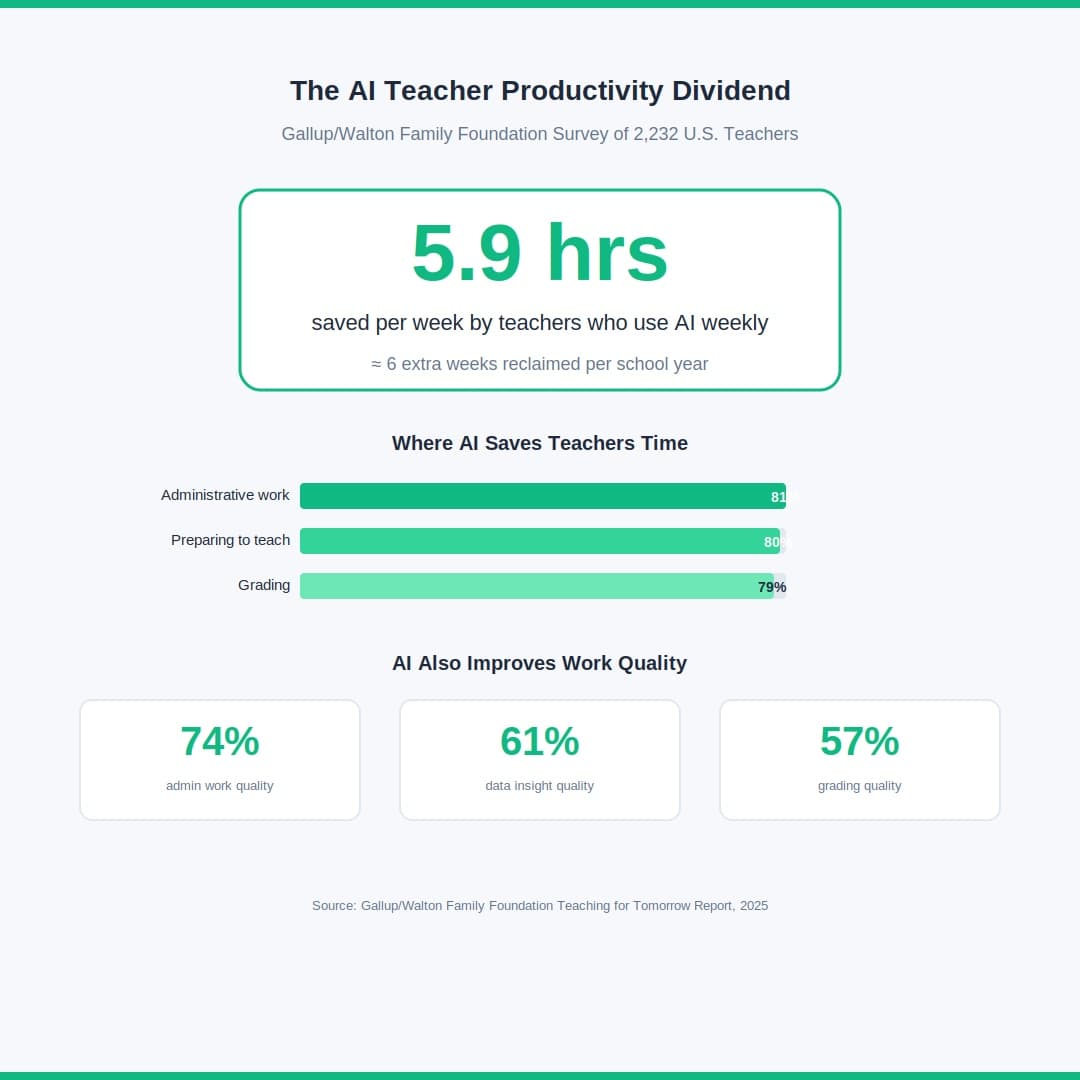
Perhaps the most compelling statistic for educators: Gallup research found that teachers who use AI weekly save 5.9 hours per week—equivalent to approximately six extra weeks reclaimed over the course of a standard school year. Teachers reinvest these savings into providing more nuanced student feedback, creating lesson plans, and generating classroom materials. Qualitative data shows teachers use saved time for individualized lessons, parent communication, and work-life balance.
11. Teacher AI Usage Nearly Doubled from 2023 to 2025
Data from the EdWeek Research Center shows that teacher AI usage nearly doubled in two years, jumping from 34% in 2023 to 61% in 2025. This rapid acceleration in AI adoption reflects growing professional development opportunities and increased awareness of AI tools benefits. As explored in our analysis of how many teachers use AI, less experienced teachers are more likely to have adopted AI than those with more than 10 years of experience, suggesting a generational shift in teaching practice.
12. 4 in 5 Students Say AI Improved Their Academic Performance
Coursera's February 2026 AI in Higher Education Report, surveying 4,261 students and educators across five countries (U.S., U.K., India, Mexico, and Saudi Arabia), found that 80% of students say AI has positively supported their learning experience. Notably, 63% of students use AI for less than half of their academic tasks, and only 5% use it for more than 80% of their work—suggesting the majority are treating AI as a supplement to their own thinking rather than a replacement. When paired with good study habits, AI tools can amplify learning rather than undercut it. The report also found that 78% of educators and students feel positive about AI's impact on higher education overall.
13. Only 20% of Universities Have a Formal AI Policy
The same Coursera report found a stark governance gap: only 20% of U.S. educators report their university has a formal AI policy, and 50% believe the U.S. higher education system is unprepared to manage AI. Meanwhile, 24% of students admit to submitting AI-generated work without disclosure. This gap between widespread adoption and institutional preparedness is one of the most urgent challenges facing higher education leaders, with the report recommending that institutions prioritize faculty upskilling and clear governance frameworks.
14. 74% of Teachers Say AI Improves Administrative Work Quality
According to the Gallup/Walton Family Foundation survey, 74% of teachers who use AI for administrative tasks say it improves the quality of their work. Quality improvements ranged from 57% for grading and feedback to 74% for administrative work, with few teachers (16% or less) reporting that quality decreased. These figures go beyond time savings to demonstrate perceived quality improvements—teachers are not merely automating routine tasks but believe that AI tools are helping them produce better lesson plans, more targeted assessments, and higher-quality classroom materials than they could create manually. For example, a quiz generator from PowerPoint can instantly convert lecture slides into assessment questions, freeing teachers to focus on instruction.
15. Male Students Show Higher Rates of Active AI Usage
The Digital Education Council's Global AI Student Survey reveals a notable gender gap in AI adoption: male students account for approximately 51% of all active AI users and are more likely to be active users of AI tools. The HEPI 2025 survey similarly found that male students, students on STEM and Health courses, and more socioeconomically advantaged students are more likely to use AI than others. This emerging disparity has significant implications for AI literacy equity and suggests that educational institutions should proactively design outreach and training programs to ensure female students develop equal confidence and competency with AI technologies before entering an increasingly AI-driven workforce.
16. Only 29% of Teachers Have Received Formal AI Training
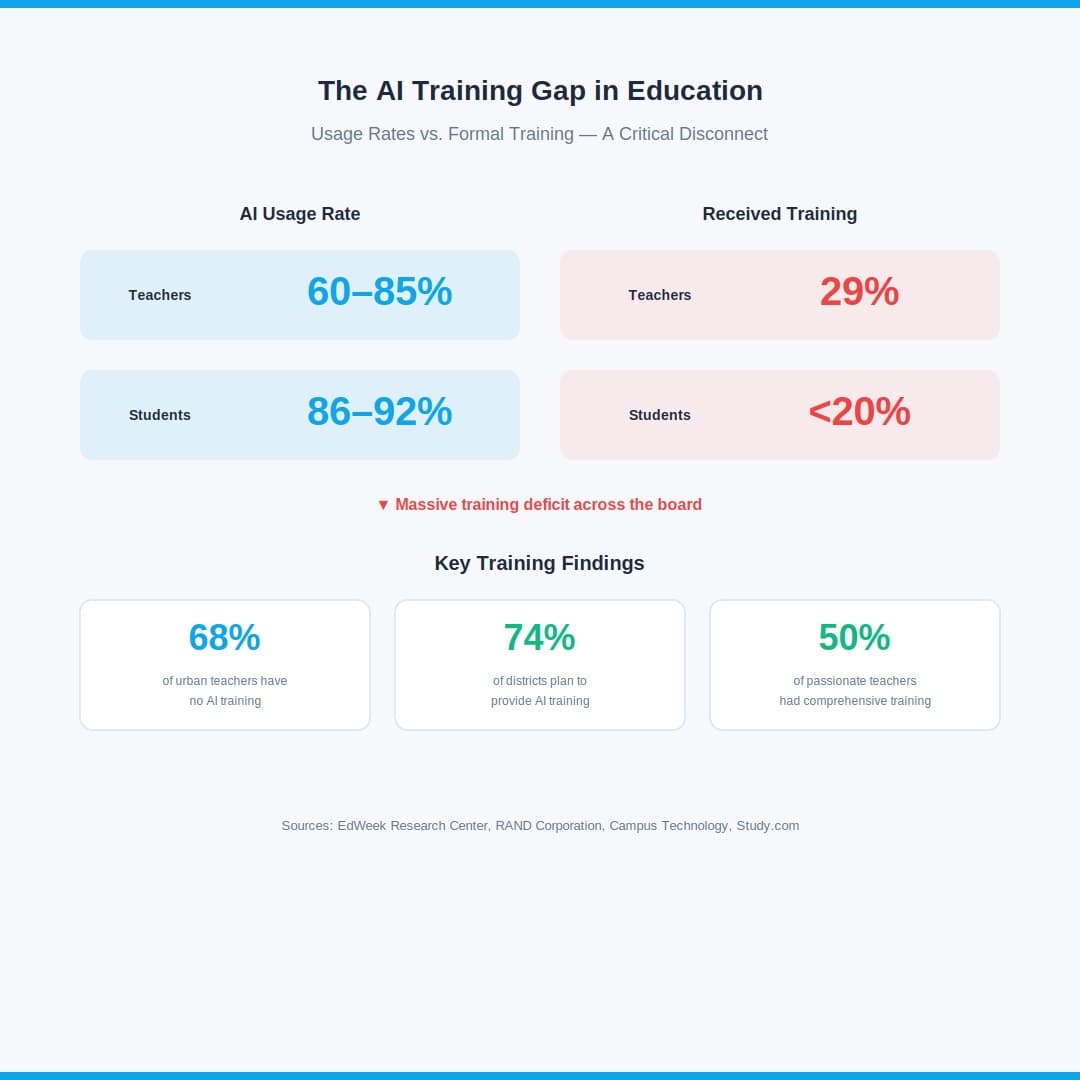
Despite widespread adoption, education research indicates that only 29% of teachers have received formal training in AI tools, creating a significant gap between usage rates of 60–85% and effective, trained integration. This usage-training disconnect means most educators are self-teaching through trial and error—a finding consistent with the RAND Corporation's discovery that over 80% of students were never formally taught how to use AI. Closing this gap is critical for ensuring that AI tools enhance rather than undermine student learning.
17. Up to 75% of Students Feel More Motivated in AI-Personalized Learning
Research across multiple studies on personalized learning environments suggests that up to 75% of students feel more motivated when learning is adapted to their individual needs through AI. Engageli's analysis of education research cites Coursera's personalized learning data showing that 74% of adult learners report greater motivation in AI-enhanced courses due to tailored learning experiences. The Coursera 2026 report further confirmed that 70% of students believe AI will improve exam performance and the overall quality of higher education. While exact figures vary by study and context, the pattern consistently shows that AI-driven personalization significantly boosts student engagement compared to one-size-fits-all instruction.
18. AI-Powered Scoring Systems Reduce Teacher Grading Time by 38.5%
A 2025 peer-reviewed study published in Discover Artificial Intelligence (Springer) found that AI-powered automated scoring systems reduced teacher grading time by 38.5% in the experimental group, compared to just 5% in the control group using conventional methods. The same study found that students receiving AI-personalized recommendations showed an 8.5% increase in exercise completion rates—more than seven times the 1.2% increase in the control group. These results demonstrate that AI tools deliver measurable benefits for both teacher productivity and student engagement simultaneously.
19. 65% Believe Unregulated AI Could Undermine Degree Credibility
According to the Coursera AI in Higher Education Report, 65% of students and educators across five countries believe that unregulated AI could undermine the credibility of university degrees. Meanwhile, 40% of students view AI-related cheating as a significant threat to academic standards, and only 27% of educators globally feel confident they can detect AI-generated work. According to the UK-specific findings, educator detection confidence has declined notably from the previous year. This erosion of detection confidence, combined with rising student AI use, is reshaping conversations about the long-term value proposition of higher education credentials.
20. 71% of Teachers View AI Assistants as Essential
According to the World Economic Forum, 71% of teachers and 65% of students view AI assistants as essential for learning and workforce preparation. This consensus between educators and learners suggests that AI has moved beyond controversy to acceptance as a core educational resource. When AI systems take over routine tasks, educators have more time for fostering critical thinking, leading brainstorming sessions, and improving student outcomes.
21. 99% of Education Leaders Have Tried AI at Least Once
The Microsoft 2025 AI in Education Report found that 99% of education leaders have tried AI at least once, though far fewer use it regularly. This gap between experimentation and sustained teaching practice transformation represents a significant opportunity for the education sector. Education leaders are more likely to use AI tools regularly compared to teachers, particularly for administrative and strategic planning purposes.
22. 85% of Teachers Used AI in 2024-25
The Center for Democracy and Technology reports that 85% of teachers used AI in 2024-25—a figure that includes a broad range of AI-powered tools beyond generative chatbots. The most common applications include research and content gathering (44%), creating lesson plans (38%), summarizing information (38%), and generating classroom materials (37%). Additionally, 51% of teachers have used AI-powered educational games, while 43% utilize adaptive learning platforms that adjust to individual student needs and learning styles. Note that this higher figure compared to Gallup's 60% likely reflects a broader definition of AI tools that includes adaptive learning platforms and AI-powered educational games.
23. AI Education Market Valued at $8.30 Billion in 2025
According to Grand View Research, the global AI education market was valued at $5.88 billion in 2024 and is expected to reach $8.30 billion in 2025, growing at a CAGR of 31.2% from 2025 to 2030. The AI in education market is experiencing unprecedented expansion driven by demand for personalized learning experiences and adaptive learning platforms. Schools and institutions are leveraging AI powered tools such as Intelligent Tutoring Systems, chatbots, and learning analytics to enhance student learning and optimize teaching practice.
24. AI in Education Market Projected to Reach $136.79 Billion by 2035
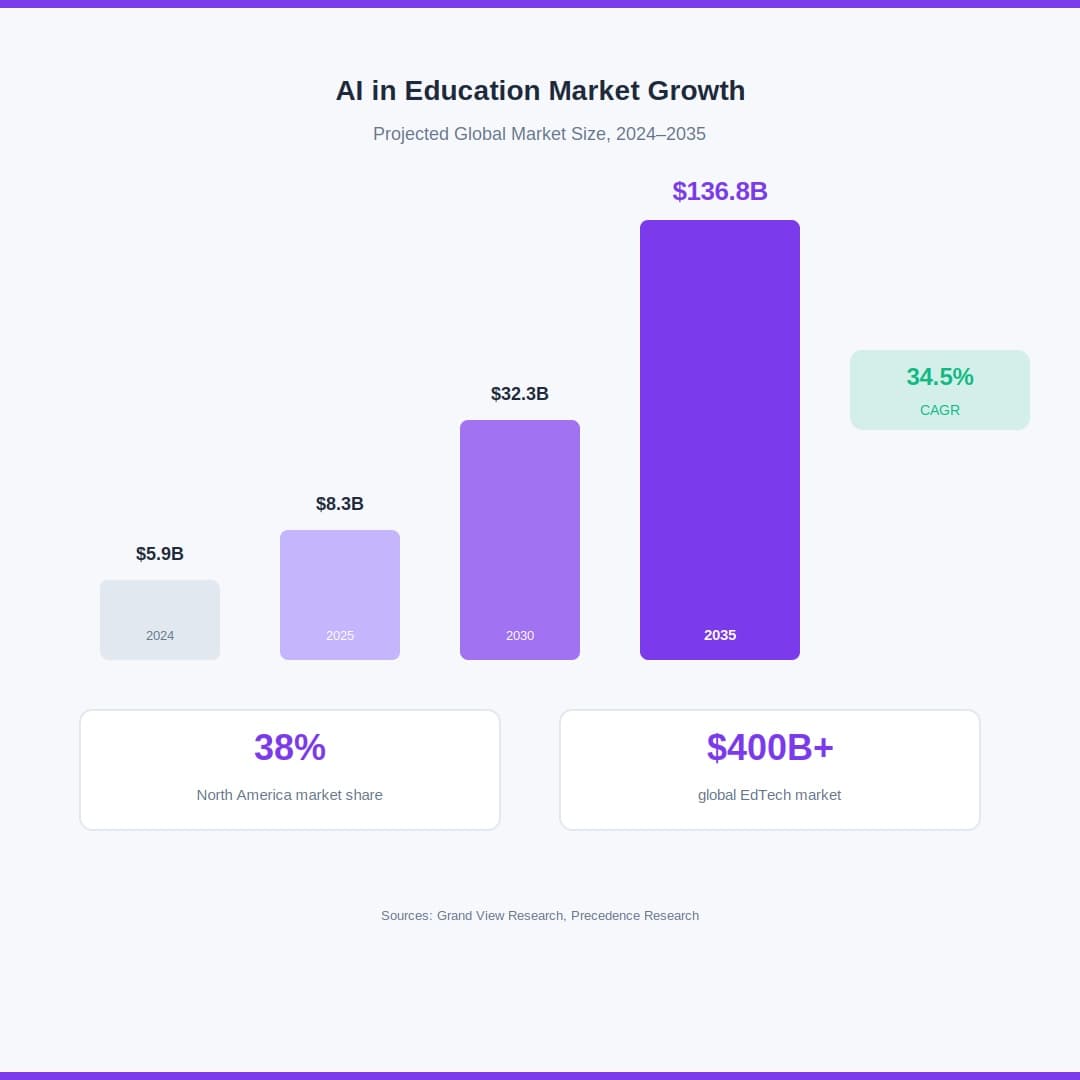
Precedence Research projects dramatic growth: the global AI in education market is calculated at $7.05 billion in 2025 and is projected to reach $136.79 billion by 2035, representing a CAGR of 34.52% from 2026 to 2035. This global AI investment reflects the transformative potential of AI technologies across the education sector. North America holds approximately 38% market share, while Asia-Pacific is experiencing the fastest growth driven by large AI-based learning startups and aggressive government mandates. The solutions segment generates more than 72% of market share.
25. AI in Education Market Expected to Reach $32.27 Billion by 2030
Grand View Research projects the global AI in education market will reach $32.27 billion by 2030, growing at a CAGR of 31.2% from 2025. This rapid expansion is driven by increasing demand for adaptive learning platforms, intelligent tutoring systems, and AI-powered administrative tools across all levels of education. The broader EdTech market has also crossed the $400 billion threshold globally, with AI powered tools driving much of this growth. Tools like Gradescope, Khanmigo, and Duolingo Max demonstrate how widespread AI technologies have become in mainstream education.
26. North America Holds 38% of the AI Education Market
According to Grand View Research, North America dominates the education market with approximately 38% market share, driven by advanced technological infrastructure and substantial investment in education technology. The Asia-Pacific region, however, is experiencing the fastest growth in AI adoption for education. Countries leading investment include the United States, China, and various European nations, with AI technologies deployed across adaptive learning platforms, administrative systems, and student progress tracking.
27. Harvard Study: Students Using AI Tutors Learned 2x as Much
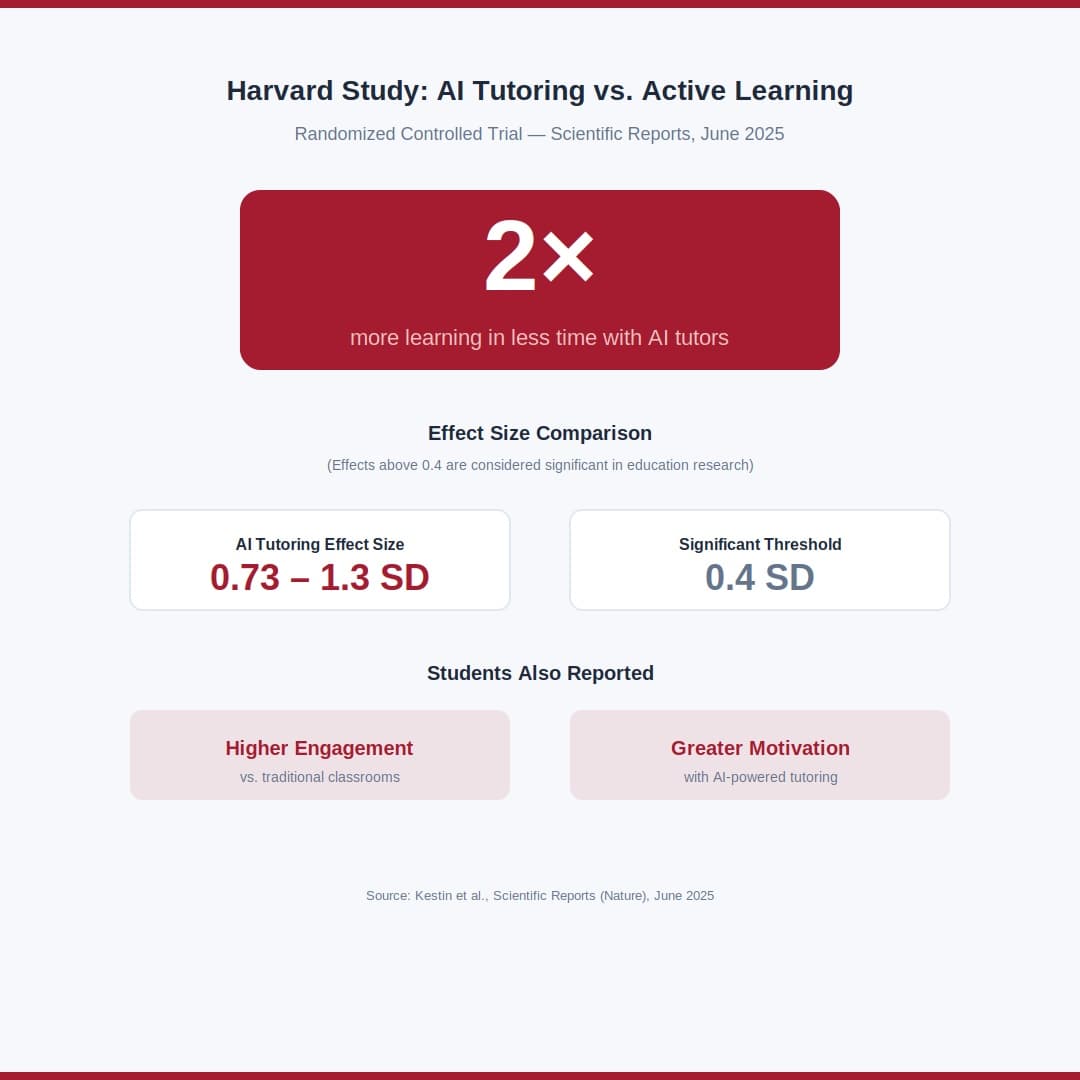
A landmark Harvard University study published in Scientific Reports (June 2025) found that students using AI tutors learned more than twice as much in less time compared to those in traditional active-learning classrooms. Students also reported feeling more engaged and motivated, demonstrating how AI systems excel at enhance student learning when properly designed. The effect size reached between 0.73 and 1.3 standard deviations—remarkable results in educational research where effects exceeding 0.4 are typically considered significant.
28. AI in Blended Learning Boosts Achievement, but Effects Diminish Over Time
A 2025 meta-analysis published in Frontiers in Psychology found that AI in blended learning environments produced a significant positive effect on learning achievement (g = 0.50) compared to non-AI approaches. However, the study revealed a critical nuance: the AI effect size in long-term interventions (one semester to one year) dropped to just 0.08, suggesting that initial gains may partly reflect technology novelty rather than sustained improvement. This finding underscores the importance of thoughtful, long-term AI integration strategies rather than simply deploying tools and expecting lasting results. Combining AI tools with proven memorization techniques may help sustain gains beyond the novelty period. Educators designing personalized learning experiences should plan for sustained engagement beyond the initial novelty period.
29. Second-Order Meta-Analysis: AI Produces a 0.67 Effect Size on Student Learning
A rigorous 2026 second-order meta-analysis published in the Journal of Educational Computing Research—synthesizing 19 first-order meta-analyses covering 58,702 total participants—found a statistically significant moderate mean effect size of 0.67 standard deviations (95% CI: 0.55–0.78) for AI technologies on student learning outcomes. This is the most comprehensive analysis of AI's impact on education to date, covering primary studies from 1993 to 2024. The findings confirm that AI technologies meaningfully contribute to student learning across diverse contexts, with effects on both academic achievement and higher-order thinking skills.
30. AI-Driven Platforms Show 15-35% Performance Gains
A systematic review published in IACIS 2025 examining 21 empirical studies found performance gains ranging from 15% to 35% with AI tools, along with increased task completion efficiency and higher learner satisfaction. However, effectiveness varied depending on context, implementation strategies, and subject matter. Key challenges identified include data privacy, infrastructure limitations, and the need for educator training to maximize student outcomes.
31. Georgia State's AI-Powered Analytics Raised Graduation Rates by 7 Percentage Points
Georgia State University's pioneering use of AI-powered predictive analytics—tracking 800 risk factors daily for over 50,000 students and generating more than 250,000 one-on-one advisor interventions—produced a 7-percentage-point increase in four-year graduation rates. Perhaps most remarkably, the university eliminated achievement gaps based on race, ethnicity, and income: for four consecutive years, Black, Hispanic, first-generation, and low-income students graduated at rates equal to or above the overall student body. Students also graduate faster, with the average time to degree decreasing by nearly a full semester, saving the graduating class $21 million annually in tuition. Georgia State's model is now being replicated through its National Institute for Student Success, where partner institutions have averaged a 10.2-percentage-point retention gain in just three years.
32. Human Tutors Still Outperform AI in Emotional Interpretation
According to DemandSage research aggregating education studies, human tutors interpret student emotional states with approximately 92% accuracy versus 68% for AI tutoring systems. While these specific figures are widely cited across education research roundups, the broader finding is well-supported: AI still significantly lags behind humans in reading emotional cues, adapting to nonverbal signals, and providing empathetic responses. This limitation underscores the continued importance of human interaction in education and suggests that AI is best positioned to augment, rather than replace, human educators. The most effective educational approaches will likely combine AI efficiency with human empathy and relationship-building.
33. 13% of U.S. Youth Use AI Chatbots for Mental Health Advice
A nationally representative 2025 survey published in JAMA Network Open by researchers from RAND, Harvard, and Brown University found that 13.1% of U.S. youth aged 12–21—approximately 5.4 million individuals—have used generative AI for mental health advice when feeling sad, angry, or nervous. Among these users, 65.5% sought AI advice at least monthly and 92.7% found it helpful. Usage was significantly higher among those aged 18–21 (22.2%). Researchers noted that the high utilization likely reflects the low cost, immediacy, and perceived privacy of AI-based advice—particularly for youth who might not otherwise receive traditional counseling. This emerging trend highlights both the opportunity and the urgent need for safeguards as AI systems increasingly serve as first-line emotional support for young people.
34. 87% of Principals Worry AI Will Reduce Critical Thinking
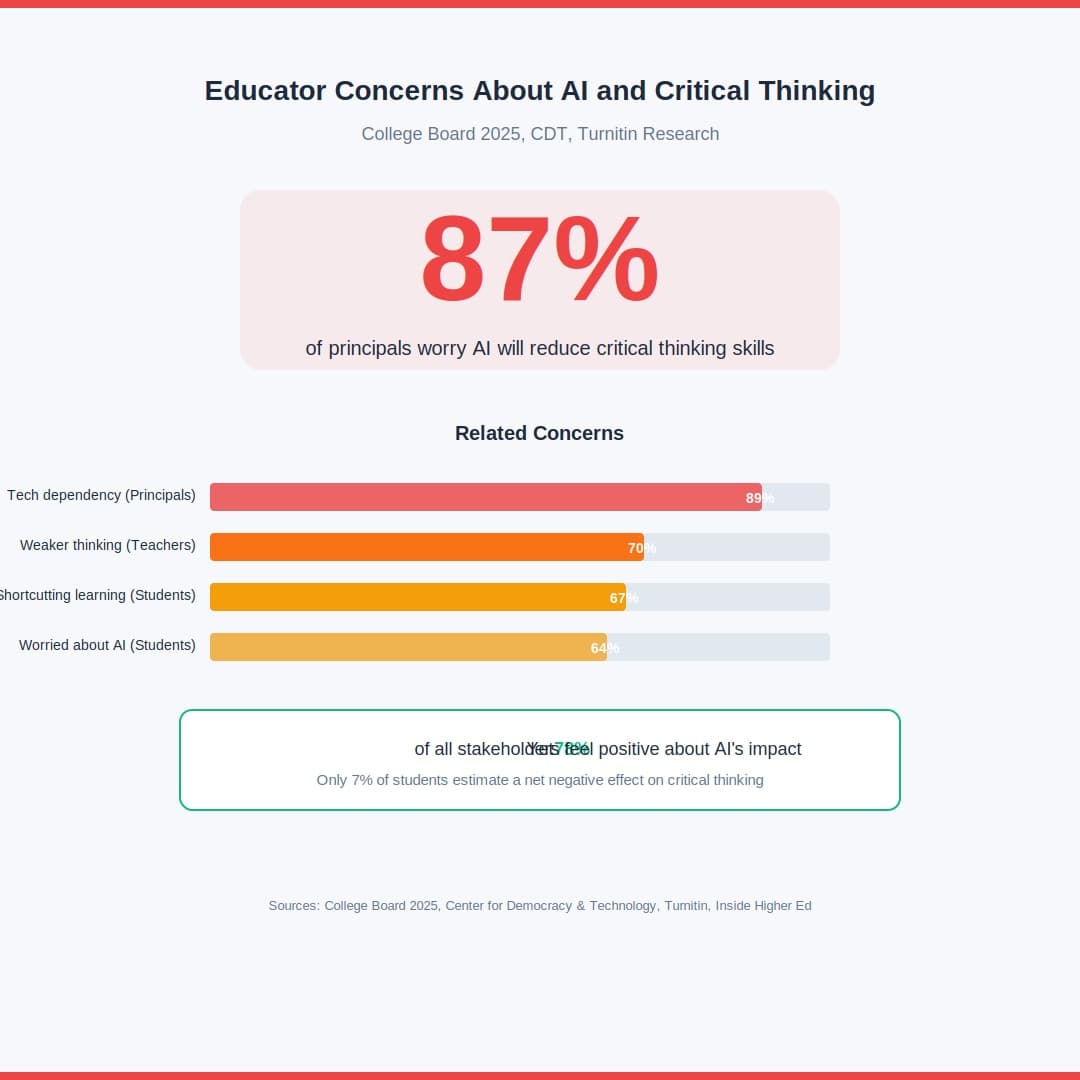
The College Board's 2025 research reveals stark concerns among school administrators: 87% of school principals worry AI will prevent students from developing critical thinking skills. Additionally, 89% worry that AI use could make students dependent on technology for basic routine tasks.
35. 70% of Teachers Worry AI Weakens Critical Thinking
The Center for Democracy and Technology reports that 70% of teachers worry AI weakens students' critical thinking and research skills. This concern about AI's impact on cognitive development is driving conversations about how to balance AI benefits with teaching students essential analytical abilities.
36. 67% of Students Feel They Are Shortcutting Their Learning
A Turnitin survey found that 67% of students themselves admit they feel they are shortcutting their learning by using AI. This self-awareness suggests that students claim both benefits and concerns about their AI dependence, creating opportunities for constructive dialogue about AI ethics.
37. 55% of Students Say AI Has Mixed Effects on Critical Thinking
According to an Inside Higher Ed Student Voice survey, 55% of students say AI has mixed effects on their critical thinking—it helps sometimes but can also make them think less deeply. Only 7% estimate a net negative effect, suggesting that with proper guidance and AI policies, integration can occur without undermining cognitive development.
38. 95% of Academic Stakeholders Believe AI Is Being Misused
The Turnitin survey found that 95% of academic administrators, educators, and students believe AI is being misused in educational settings. Despite this near-universal concern, 78% of all survey participants feel positive about AI's impact on education—revealing complex attitudes toward AI technologies in learning environments.
39. Only 10% of Schools Have Established AI Guidelines
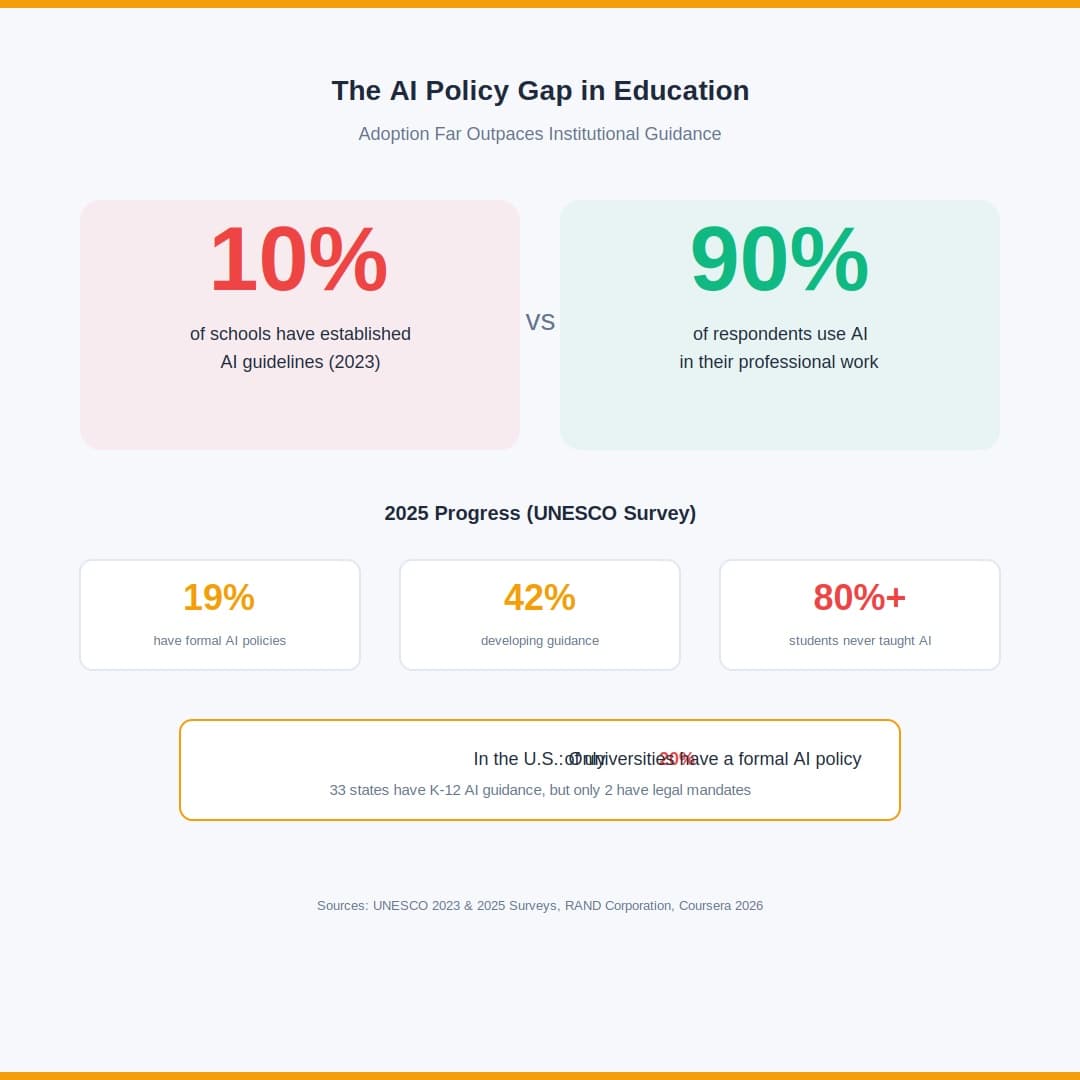
A 2023 UNESCO survey covering more than 450 schools and universities found that only 10% had established formal policies or guidance for using AI. A follow-up 2025 UNESCO survey of higher education institutions showed progress: 19% now have formal AI policies and another 42% report guidance is under development—yet this still means more than one third of institutions operate without clear frameworks. Nine in ten respondents in the 2025 survey reported using AI tools in their professional work, most commonly for research and writing tasks, yet institutional guidance continues to lag far behind actual usage.
40. Over 80% of Students Were Never Taught How to Use AI
The RAND Corporation's 2025 findings are striking: over 80% of students report that teachers never explicitly taught them how to use AI for school work. Only 35% of district leaders report providing students with AI training, revealing a significant gap between AI usage and formal instruction. Training and guidance need to explain how to use AI to complement, not supplant, learning—a distinction many institutions have yet to articulate clearly.
41. 33 U.S. States Now Have Official AI Guidance for K-12
According to AI for Education, 33 U.S. states now have official AI guidance for K-12 schools. However, only two states currently have legal mandates requiring districts to develop AI policies. Most states offer recommendations rather than requirements, leaving significant variation in how schools approach AI technologies. This patchwork approach means students in different states receive vastly different levels of preparation for an AI driven world.
42. 42% of Students Say University Staff Are Well-Equipped with AI
The HEPI 2025 survey found that 42% of students now say university staff are well-equipped to help with AI—more than double the 18% reported in 2024. This improvement suggests higher education leaders are making progress in professional development, though significant gaps remain in AI training capacity. The rapid improvement indicates that targeted investment in faculty development can quickly change student perceptions of institutional readiness.
43. 74% of School Districts Plan AI Training for Teachers
According to Codegnan research, 74% of school districts plan to provide AI training for teachers. This commitment to professional development reflects growing recognition that effective AI integration requires sustained support for educators adapting their teaching practice. Districts are increasingly recognizing that teacher preparation is the key bottleneck in realizing AI's potential to enhance student learning.
44. 80% of Chinese Students Feel Excited About AI in Education
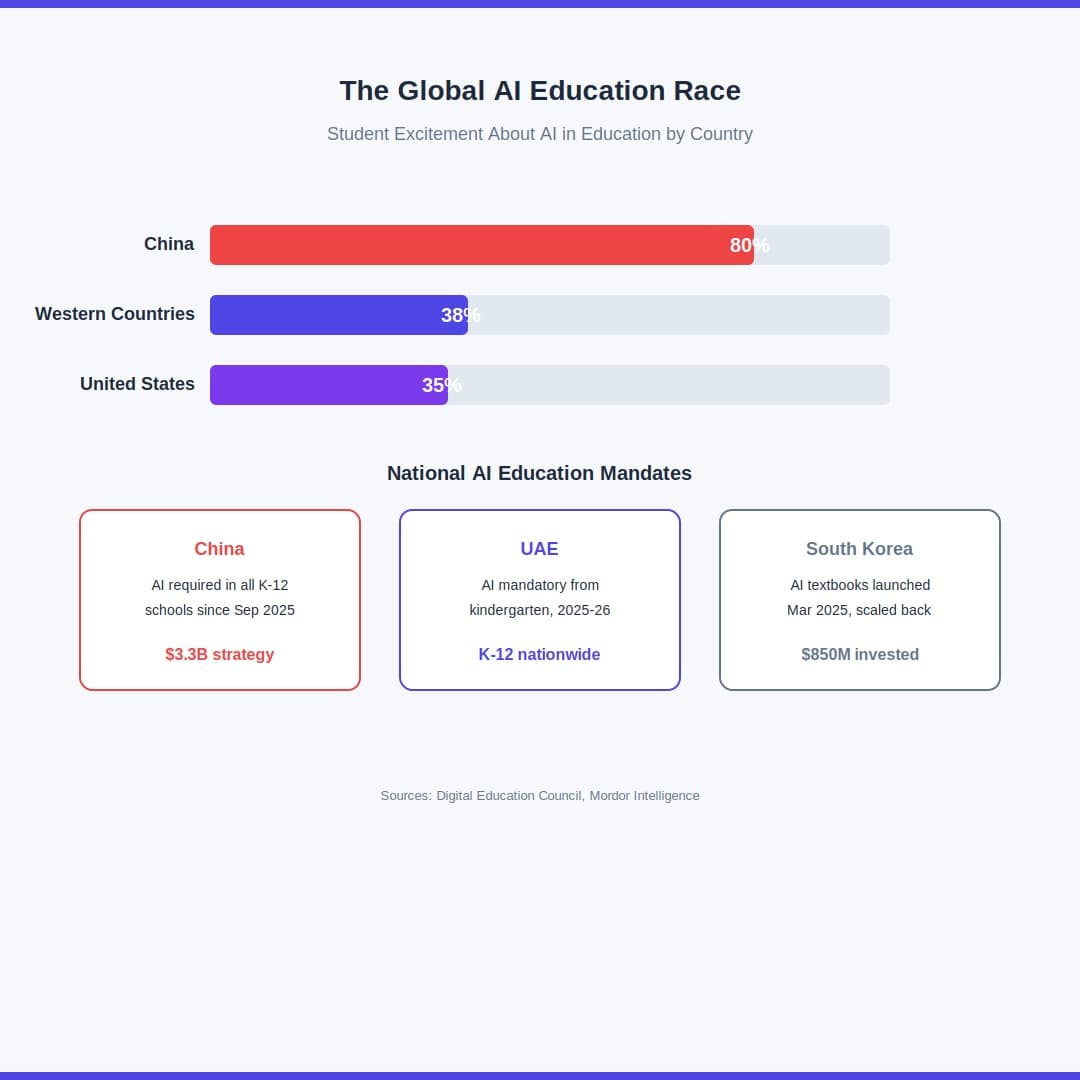
The Digital Education Council's global survey reveals striking attitudinal differences: 80% of Chinese students feel excited about AI in education, compared to just 35% in the United States and 38% in other Western countries. This enthusiasm gap has implications for global AI competitiveness and the AI enabled workforce of the future.
45. China Made AI a Required Subject in All Schools
According to Mordor Intelligence, China made AI a required subject in all primary and secondary schools as of September 2025, mandating eight hours of AI coursework yearly for primary learners within a $3.3 billion national strategy. This aggressive approach to AI literacy education reflects national priorities for preparing an AI enabled workforce.
46. UAE Made AI Mandatory from Kindergarten
According to Mordor Intelligence, the UAE made AI mandatory for all public school students starting kindergarten in the 2025-26 school year, backed by centralized teacher-training programs. South Korea launched AI-powered digital textbooks in March 2025, investing approximately $850 million in adaptive learning platforms—though the program was scaled back after just four months following complaints about factual errors, privacy risks, and increased teacher workloads, with lawmakers revoking the textbooks' official status by August 2025. South Korea's experience serves as a cautionary tale about the risks of rushing AI deployment in education without sufficient testing and educator buy-in.
47. 64% of Students Worry About AI in Education
A Turnitin survey found that 64% of students worry about the use of AI within education—outpacing academic administrators (41%) and educators (50%). For educators and students feel alike, overreliance on AI and potential loss of critical thinking skills were identified as top concerns.
48. 68% of Urban Teachers Have Not Received AI Training
According to Campus Technology reporting, 68% of urban teachers have not received any kind of AI training. Yet 90% of educators have spent time outside of work to learn about AI on their own—indicating strong interest that isn't being met through formal professional development channels.
49. Teachers with AI Training Report Higher Passion for Teaching
According to Study.com research, among educators who experienced an increase in passion for teaching, 50% had received comprehensive AI training, compared to just 9% who had not. This correlation between AI training and teacher enthusiasm has significant implications for retention.
50. 40% of Universities Use AI for Scheduling and Enrollment
According to LITSLINK research, 40% of universities now use AI for scheduling and enrollment, reducing manual work, errors, and staff time. This automation of administrative tasks allows institutions to reallocate resources toward direct student learning support and improving student outcomes.
51. 83% of Educators Expect to Save 2+ Hours Weekly with AI
According to Google's education research, 83% of educators who completed Google's Generative AI for Educators course expect to save 2+ hours weekly using AI powered tools. This freed time can be reinvested in activities that require human interaction—building relationships with students and addressing individual learning needs.
52. 51% of Teachers Use AI-Powered Educational Games
According to Forbes research, 51% of teachers have used AI-powered educational games in their classrooms, while 43% utilize adaptive learning platforms in their teaching practice. These tools help educators enhance student learning by providing interactive experiences that adapt to individual learning styles.
53. One in Five Students Uses AI Search Engines Daily
According to the Digital Education Council, one in five students uses AI search engines daily, with AI-powered search becoming the second most popular AI application after chatbots. This shift has significant implications for teaching students research skills and critical thinking in an age of AI generated content.
54. 57% of Higher Education Institutions Prioritize AI in 2025
According to Workday research, 57% of higher education institutions are prioritizing AI in 2025—up from 49% the previous year. Higher education leaders recognize that students now expect personalized learning experiences and AI-powered support systems that cater to their unique learning styles.
55. 39% of Core Job Skills Expected to Change by 2030
The World Economic Forum's Future of Jobs Report 2025 projects that 39% of workers' core skills are expected to change by 2030, driven by technological advancements, the green transition, and demographic shifts. Technology skills in AI, big data, and cybersecurity are expected to see the most rapid growth in demand. Meanwhile, 70% of employers plan to hire staff with new skills suited to emerging technologies, and 85% of employers plan to prioritize workforce upskilling by 2030. This transformation makes AI literacy and preparing an AI enabled workforce urgent priorities for educational institutions at all levels.
Conclusion
The AI in education statistics presented here reveal a sector in rapid transformation. With 92% of university students using AI, teachers saving six weeks per year, and Harvard research showing doubled learning outcomes, the benefits are substantial. Yet challenges remain: 87% of principals worry about critical thinking, 80% of students never received formal AI training, only 20% of universities have formal AI policies, and 65% believe unregulated AI could undermine degree credibility.
As the AI in education market grows toward $137 billion by 2035, the question is no longer whether AI will transform education, but how thoughtfully we guide that transformation. The decisions made by higher education leaders, policymakers, and educators today will shape student learning for generations.
For more AI in education insights, follow the latest research from the Digital Education Council, RAND Corporation, and UNESCO.